

Atacama Tour Guide – Discover the Atacama Desert with an English-Speaking Guide
English-Speaking Tour Guide in the Atacama Desert
The Atacama Desert in northern Chile is one of the world's most extraordinary travel destinations. Towering volcanoes, colorful lagoons, vast salt flats, surreal rock formations, steaming geysers, and one of the clearest night skies on Earth make this region a paradise for nature lovers, photographers, and adventure travelers.
As an experienced German-speaking Tour Guide in the Atacama Desert, I accompany visitors through this breathtaking landscape, sharing the fascinating history, geology, indigenous cultures, wildlife, and astronomy that have made the Atacama famous around the world.
The Atacama is far more than simply the driest desert on Earth. It is a land of dramatic contrasts where ancient civilizations, spectacular natural wonders, and world-leading astronomical research come together. Exploring the region with an experienced local guide provides insights far beyond those found in any travel guidebook.
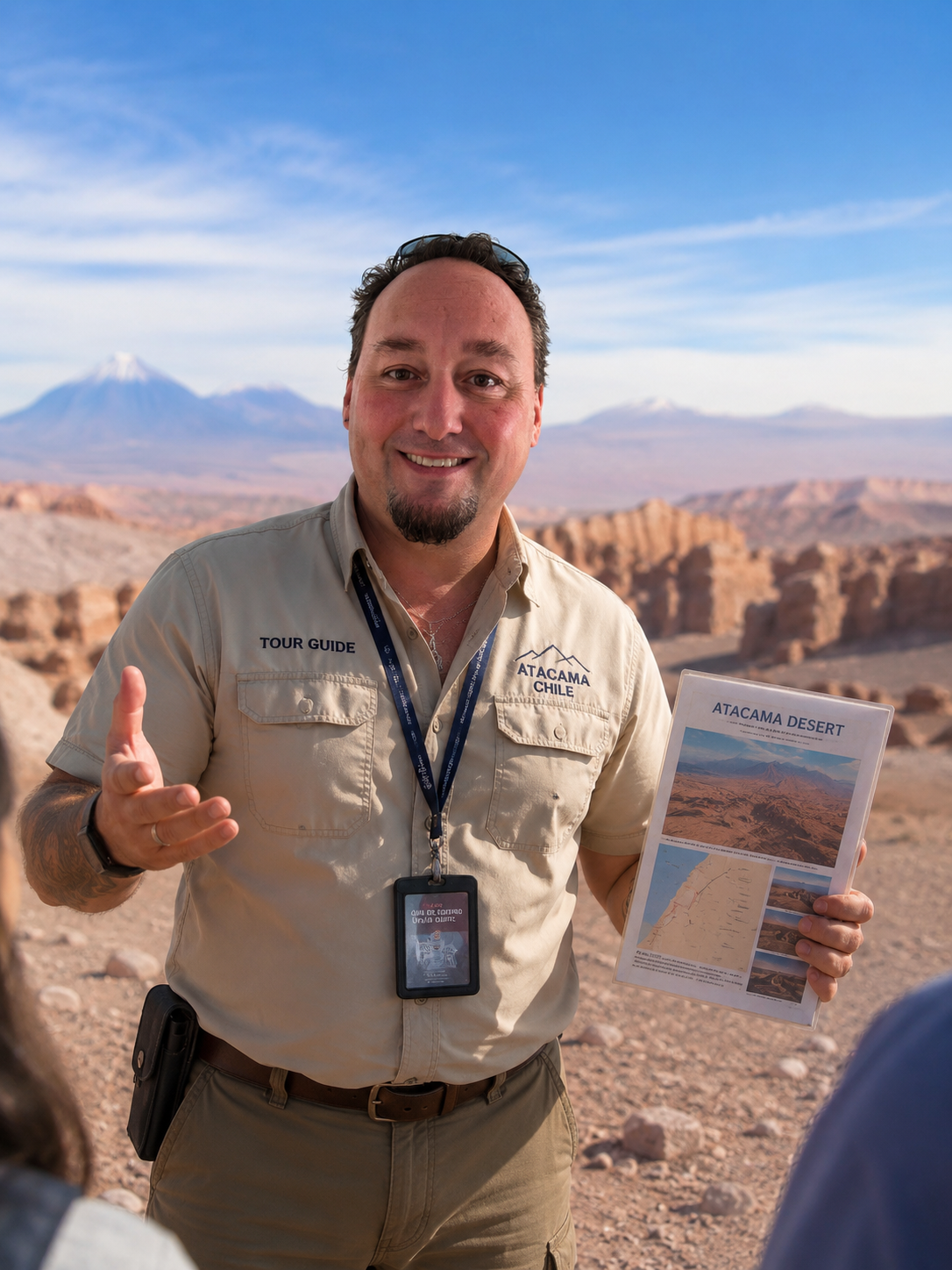
The Atacama Desert – A Landscape Like Another Planet
Stretching more than 1,000 kilometers (620 miles) along Chile's Pacific coast, the Atacama Desert is often compared to the surface of Mars because of its extreme aridity. Some areas have gone decades without measurable rainfall.
Despite these harsh conditions, the Atacama surprises visitors with an astonishing variety of landscapes. Between the Pacific Ocean and the Andes Mountains lie salt flats, high-altitude lagoons, active volcanoes, geysers, deep canyons, and lush oases—creating one of South America's most spectacular natural environments.
The heart of tourism in the region is San Pedro de Atacama, a charming desert oasis located at approximately 2,400 meters (7,900 feet) above sea level. It serves as the perfect base for exploring the area's most famous attractions.
San Pedro de Atacama – The Heart of the Desert
San Pedro de Atacama is one of Chile's best-known destinations and the starting point for almost every excursion into the Atacama Desert.
The town has preserved its traditional atmosphere with adobe houses, narrow streets, and the historic Church of San Pedro, one of Chile's oldest colonial churches.
During our visit, I introduce travelers to the fascinating history of the Atacameño (Lickanantay) people, who have successfully adapted to life in one of the harshest environments on Earth for centuries. Long before the arrival of the Incas and later the Spanish, they developed sophisticated irrigation systems, agriculture, and extensive trade networks.

Valle de la Luna – Moon Valley
One of the Atacama's most iconic attractions is Valle de la Luna (Moon Valley).
Over millions of years, wind and erosion have sculpted an extraordinary landscape of sandstone formations, salt caves, giant dunes, and rugged ridges that closely resemble the surface of the Moon.
Sunset is particularly spectacular, as the rocks transform into brilliant shades of gold, orange, red, and violet.
Moon Valley forms part of the Los Flamencos National Reserve and is one of the most visited natural attractions in northern Chile.
Valle de la Muerte – Death Valley
Just outside San Pedro lies Valle de la Muerte (Death Valley).
Despite its dramatic name, it is one of the region's most beautiful landscapes. Towering cliffs, colorful rock formations, and expansive sand dunes create an unforgettable setting for photography, hiking, and nature exploration.
Sunrise and sunset provide especially dramatic lighting conditions.
The High-Altitude Lagoons
Among the highlights of every Atacama journey are the spectacular Miscanti and Miñiques Lagoons, located more than 4,000 meters (13,100 feet) above sea level.
Their deep-blue waters contrast beautifully with snow-capped volcanoes and the surrounding Andean landscape.
During our tour, I explain:
- The geological formation of the Andes
- Volcanic activity in northern Chile
- High-altitude ecosystems
- How plants and animals survive in extreme environments
Salar de Atacama & Flamingo Lagoon
The Salar de Atacama is Chile's largest salt flat and one of the country's most impressive natural wonders.
Within the salt basin lies Laguna Chaxa, one of the best places in South America to observe flamingos in their natural habitat.
Visitors frequently encounter:
- Chilean Flamingos
- Andean Flamingos
- James's Flamingos (Puna Flamingos)
Wildlife observation and landscape photography make this area one of the highlights of every Atacama itinerary.

El Tatio Geysers – One of the World's Highest Geothermal Fields
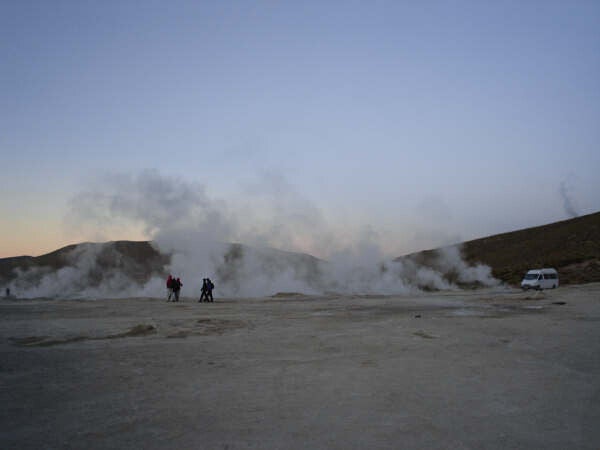
The El Tatio Geysers are among northern Chile's most spectacular natural attractions.
Situated at approximately 4,300 meters (14,100 feet) above sea level, El Tatio is one of the highest geothermal fields on Earth.
The most impressive time to visit is shortly after sunrise, when cold morning temperatures create dramatic columns of steam rising from dozens of active geysers.
On the drive through the Andean highlands, visitors often spot:
- Vicuñas
- Vizcachas
- Andean Foxes
- Flamingos
- Various high-altitude bird species
World-Class Astronomy in the Atacama
The Atacama Desert offers some of the finest astronomical observing conditions anywhere on Earth.
Its dry climate, minimal light pollution, and more than 300 clear nights each year have made northern Chile a global center for astronomical research.
Several of the world's leading observatories are located here, including:
- ALMA Observatory
- Paranal Observatory
- Cerro Tololo Observatory
- La Silla Observatory
For travelers, stargazing in the Atacama is an unforgettable experience. Under exceptionally dark skies, the Milky Way, countless star clusters, nebulae, and distant galaxies become visible—even without a telescope.
The History of the Atacama
The Atacama region has been inhabited for thousands of years.
Long before the arrival of the Spanish, the indigenous Lickanantay (Atacameño) people established thriving communities throughout the desert.
Later, the region became part of the Inca Empire, and traces of the famous Qhapaq Ñan (Inca Road System) can still be found today.
During the nineteenth century, the Atacama gained international importance through the mining of nitrate and copper. Historic mining towns remain fascinating reminders of this important chapter in Chilean history.
Why Explore the Atacama with a German-Speaking Tour Guide?
The Atacama Desert is much more than spectacular scenery.
Understanding its geology, archaeology, indigenous heritage, and scientific importance transforms a visit into a truly unforgettable experience.
Clear Explanations
Learn about geology, astronomy, history, archaeology, and local culture in your native language.
Local Knowledge
Benefit from current information, hidden viewpoints, practical travel advice, and years of firsthand experience.
Personalized Service
Enjoy flexible itineraries and receive answers to all your questions throughout the journey.
Authentic Cultural Experiences
Meet local communities and gain genuine insights into life in one of the world's most remarkable desert regions.
Best Time to Visit the Atacama Desert
The Atacama Desert can be visited throughout the year.
Spring & Autumn
- Pleasant temperatures
- Fewer visitors
- Excellent sightseeing conditions
Summer
- Warm daytime temperatures
- Occasional Altiplano summer rains
- Vibrant desert landscapes
Winter
- Crystal-clear skies
- Cold nights
- Outstanding stargazing opportunities
Every season offers unique experiences depending on your interests.
Experience the Atacama Desert
The Atacama Desert is one of South America's most extraordinary destinations.
From the surreal landscapes of Moon Valley and Death Valley to the flamingos of Salar de Atacama, the steaming El Tatio Geysers, and the breathtaking Andean lagoons, every excursion reveals another side of this unforgettable region.
As an experienced German-speaking Tour Guide in the Atacama Desert, I am passionate about helping visitors discover the region's remarkable landscapes, rich history, fascinating indigenous cultures, and world-famous astronomical heritage.
If you want to do more than simply visit the Atacama—if you want to truly understand it—a professionally guided tour combines nature, history, culture, and astronomy into an enriching travel experience.
Discover the Atacama Desert with a local expert and experience one of the most spectacular landscapes on Earth.