

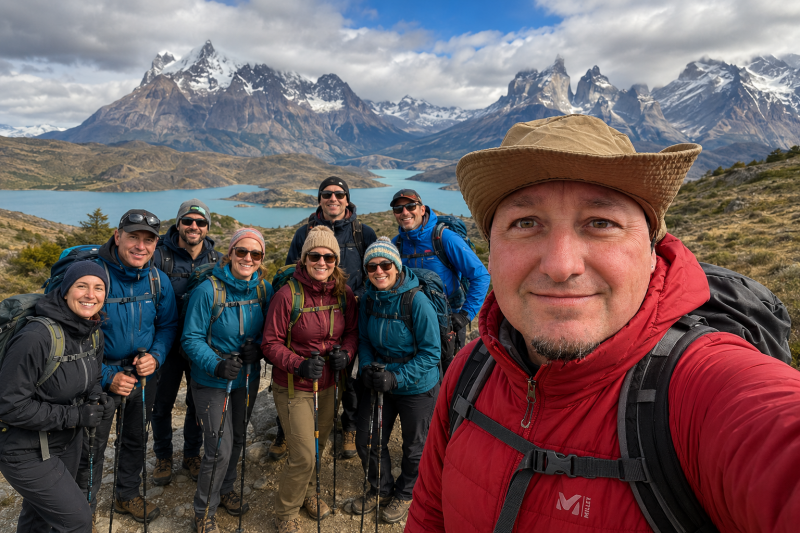
Patagonia is one of the most spectacular trekking destinations in the world. From the granite towers of Torres del Paineand the glaciers of the Southern Patagonian Ice Field to the forests, lakes and mountains of Aysén and Tierra del Fuego, Patagonia offers unforgettable hiking experiences.
But Patagonia is also famous for its rapidly changing weather. Sunshine can turn into rain, strong wind or even snow within a short time. For this reason, the right trekking equipment is not a luxury—it is an essential part of a safe and enjoyable hiking experience.
For a typical day hike in Patagonia, you do not need the extensive equipment required for a multi-day trek such as the W Trek or O Circuit. However, you should always be prepared for several hours in remote terrain and for weather conditions that can change quickly. The official Torres del Paine recommendations specifically emphasize layered clothing suitable for rain, wind and snow, while CONAF recommends appropriate footwear, waterproof clothing and trekking poles for longer excursions.
Why Patagonia Requires Special Trekking Equipment
Patagonian hiking is different from many European or North American mountain destinations. The main challenge is not necessarily altitude. Instead, hikers have to deal with wind, rain, rapidly changing temperatures, exposed terrain and sometimes muddy or slippery trails.
In Torres del Paine, for example, official park information warns that weather conditions can change rapidly and recommends clothing suitable for rain, wind and snow. Hikers are also advised not to leave marked trails.
In more remote areas of Patagonia, weather-related closures are possible. CONAF notes that trails can be closed because of torrential rain, snow, frost or strong wind.
The basic principle is therefore:
Pack for the worst realistic weather, not just the weather you see when you leave your hotel.
1. The Right Trekking Shoes
Good footwear is probably the most important item of trekking equipment for a day hike in Patagonia.
For most trails, I recommend:
- Waterproof hiking boots or sturdy hiking shoes
- Good ankle support for uneven terrain
- A grippy sole suitable for rocks and mud
- Comfortable, moisture-wicking trekking socks
- A spare pair of socks in a waterproof bag
The choice between low hiking shoes and high trekking boots depends on the trail.
Hiking shoes
Light hiking shoes are ideal for:
- Short and easy trails
- Well-maintained paths
- Dry conditions
- Lower elevations
- Travelers who prefer lightweight equipment
Trekking boots
Higher boots are preferable for:
- Rocky trails
- Wet and muddy terrain
- Longer day hikes
- Steeper trails
- Unstable ground
- Cold or wet conditions
The official information for Torres del Paine recommends appropriate footwear for rocky and potentially slippery terrain.
Tip: Never start a long Patagonian hike with brand-new boots. Wear them several times before your trip.
2. The Three-Layer Clothing System
The three-layer system is one of the best ways to dress for Patagonia.
It allows you to adapt quickly when temperatures and weather conditions change.
Base Layer
The base layer sits directly against your skin.
Choose:
- Merino wool
- Synthetic technical fabric
- Moisture-wicking underwear
Avoid cotton for longer hikes because cotton absorbs moisture and dries slowly.
Mid Layer
The middle layer provides insulation.
Good choices include:
- Fleece jacket
- Lightweight synthetic insulated jacket
- Thin down jacket
A fleece is particularly versatile because it provides warmth without adding too much weight.
Outer Layer
The outer layer protects you against Patagonia's most famous elements:
wind and rain.
A good waterproof and breathable shell jacket should be part of your day-hiking equipment.
Look for:
- Waterproof fabric
- Breathability
- Adjustable hood
- Waterproof or protected zippers
- Good wind protection
The Torres del Paine authorities specifically recommend a layered clothing system and protection against rain, wind and snow.
3. Waterproof Trousers
Rain trousers are often underestimated.
Even if the forecast looks good when you leave, Patagonia can surprise you.
A lightweight pair of waterproof trousers can be packed into your backpack and only used when necessary.
They are particularly useful in:
- Torres del Paine
- Tierra del Fuego
- Aysén
- Coastal Patagonia
- Exposed mountain areas
They also provide an additional wind barrier when temperatures drop.
4. A Good Daypack
For day hikes, a 20–30 litre backpack is usually an excellent compromise.
It should be:
- Comfortable
- Adjustable
- Lightweight
- Weather resistant
- Equipped with a waist belt
- Equipped with external attachment points
A rain cover is highly recommended.
Alternatively, organize important equipment inside waterproof dry bags.
Your backpack should have enough space for clothing, water, food, first-aid equipment and emergency gear without becoming unnecessarily heavy.
5. Water and Hydration
Never underestimate how much water you need in Patagonia.
For a typical day hike, carry approximately 1.5–2.5 litres of water per person, depending on temperature, trail difficulty and access to reliable water sources.
Useful options include:
- Reusable water bottles
- Hydration bladder
- Insulated bottle
- Water purification tablets or filter for appropriate backcountry situations
Do not automatically assume that every stream is safe to drink from.
For many day hikes, carrying your own water is the simplest and safest solution.
6. Food and High-Energy Snacks
Even on a relatively short hike, bring enough food to cover delays.
Good trekking snacks include:
- Nuts
- Trail mix
- Energy bars
- Dried fruit
- Chocolate
- Sandwiches
- Bananas
- Crackers
Choose food that provides a combination of carbohydrates, fat and protein.
The official Torres del Paine guidance recommends carrying sufficient water and food and choosing lightweight, energy-dense provisions.
7. Trekking Poles
Trekking poles are highly recommended for Patagonia.
They are especially useful on:
- Steep descents
- Rocky terrain
- Muddy trails
- Wet roots
- River crossings where permitted
- Long day hikes
They reduce the load on your knees and provide additional stability.
The official Torres del Paine recommendations specifically mention trekking poles as part of the essential equipment for difficult conditions.
Choose lightweight, adjustable poles that can be packed into your backpack when you do not need them.
8. Headlamp
A headlamp may seem unnecessary for a day hike, particularly during summer when Patagonia has extremely long daylight hours.
Nevertheless, it belongs in your backpack.
Why?
A hike can take longer than expected because of:
- Bad weather
- Injuries
- Navigation problems
- Slow hiking partners
- Unexpected trail conditions
A small LED headlamp weighs very little but can become extremely valuable if you return later than planned.
Always check the batteries before starting.
9. First-Aid Kit
Every trekking backpack should contain a small personal first-aid kit.
For a day hike, consider:
- Plasters
- Blister treatment
- Sterile gauze
- Disinfectant
- Elastic bandage
- Pain medication you normally use
- Personal medication
- Small scissors
- Medical tape
Blisters are among the most common problems on long hikes, so blister protection is particularly useful.
The current Torres del Paine recommendations also list a personal first-aid kit among the essential equipment for difficult conditions.
10. Sun Protection
Patagonia can be deceptive.
Cool temperatures do not mean weak sunlight.
Your daypack should therefore contain:
- High-SPF sunscreen
- Sunglasses
- Sun hat or cap
- Lip balm with UV protection
Wind can also increase the risk of dry or irritated skin.
The official Torres del Paine trekking guidance recommends sunscreen because both the sun and strong winds can be intense in the region.
11. Gloves and Warm Hat
Even in summer, gloves and a warm hat are worth carrying.
You may not need them at the beginning of the hike, but conditions can change dramatically.
A good combination is:
- Lightweight fleece gloves
- Warm beanie
- Optional waterproof outer gloves
In winter or shoulder seasons, substantially warmer equipment is necessary.
For winter conditions in Torres del Paine, the park recommends warm clothing, gloves, a hat, high-top boots, trekking poles and micro-crampons among other equipment.
12. Navigation and Communication
Do not rely exclusively on your smartphone.
Your phone is useful for:
- GPS navigation
- Weather forecasts
- Emergency communication
- Photography
But batteries can run out, especially in cold weather.
For longer or more remote day hikes, consider carrying:
- Offline maps
- Power bank
- Physical map
- Compass
- GPS device if appropriate
In particularly remote areas, satellite communication can be relevant. Some Patagonian protected areas are extremely isolated, and rescue can take considerable time.
The most important rule is:
Tell someone where you are going and when you expect to return.
In Torres del Paine, visitors are required to register at ranger stations, and the park strongly emphasizes following ranger instructions and staying on authorized trails.
13. Mobile Phone and Power Bank
A smartphone is one of the most useful pieces of modern trekking equipment.
Use it for:
- GPS
- Offline maps
- Weather information
- Emergency calls
- Photos
- Communication
But do not depend on mobile coverage everywhere.
Bring a compact power bank and keep your phone in an easily accessible but protected location.
In cold weather, batteries can lose capacity quickly. Keeping your phone warm inside an inner pocket can help.
14. Emergency Equipment
For an easy, short hike close to civilization, you do not need expedition-level equipment.
For more remote trails, however, consider adding:
- Emergency blanket
- Whistle
- Waterproof matches or lighter where legally permitted and safe
- Small emergency shelter or bivy
- Extra food
- Extra warm layer
- Satellite communicator for remote routes
Always follow local park regulations. For example, CONAF prohibits fires and other sources of heat in Parque Nacional Patagonia.
15. What About Micro-Crampons?
Micro-crampons are not necessary for normal summer day hikes on dry trails.
However, they can be very useful during:
- Winter
- Spring
- Early season
- Icy conditions
- Snow-covered trails
Conditions can change significantly from one trail to another.
Torres del Paine's current winter guidance specifically includes micro-crampons among the recommended equipment for icy and snowy conditions.
Do not use traction equipment simply because you own it. Make sure you know how to use it and check the actual trail conditions first.
16. What You Usually Do NOT Need for a Day Hike
One advantage of day trekking is that you can keep your backpack relatively light.
For most standard day hikes, you normally do not need:
- Large expedition backpack
- Heavy sleeping bag
- Tent
- Camping stove
- Cooking equipment
- Large quantities of food
- Heavy climbing equipment
The exception is when the route, season or conditions require additional equipment.
The golden rule is:
Light enough to walk comfortably, but prepared enough to deal with unexpected conditions.
Patagonia Day-Hike Packing List
For a typical summer day hike in Patagonia, I recommend the following basic setup:
Clothing
- Waterproof hiking boots or sturdy hiking shoes
- Trekking socks
- Base layer
- Fleece or insulating layer
- Waterproof/windproof jacket
- Lightweight waterproof trousers
- Trekking trousers
- Warm hat
- Lightweight gloves
- Sun hat
Backpack
- 20–30 litre daypack
- Rain cover
- 1.5–2.5 litres of water
- High-energy snacks/lunch
- Sunglasses
- Sunscreen
- Personal first-aid kit
- Headlamp
- Power bank
- Mobile phone
- Offline map
- Emergency blanket
- Whistle
- Personal medication
Optional
- Trekking poles
- Water filter
- Camera
- Binoculars
- Satellite communicator
- Micro-crampons depending on season and trail conditions
Summer, Shoulder Season and Winter: Adjust Your Equipment
There is no single "Patagonia packing list" that works for every month.
December to February – Summer
Summer is generally the most popular trekking season.
Nevertheless, you should still be prepared for:
- Strong wind
- Rain
- Cool temperatures
- Rapid weather changes
A waterproof shell, warm layer and proper hiking footwear remain essential.
March to May – Autumn
Autumn brings colder temperatures and shorter days.
Add:
- Warmer insulating layer
- Warmer gloves
- More substantial hat
- Headlamp
- Additional emergency clothing
June to August – Winter
Winter trekking is a completely different proposition.
Snow, ice and very low temperatures can make some trails unsuitable or inaccessible.
Torres del Paine currently warns visitors about trails covered by ice and significant amounts of snow and recommends specialized cold-weather equipment.
Never assume that a summer hiking route is automatically safe in winter.
September to November – Spring
Spring can be unpredictable.
You may experience:
- Snow
- Rain
- Strong wind
- Mud
- Cold mornings
- Pleasant afternoons
A flexible layering system is particularly useful.
The Most Important Rule: Check the Weather Before You Go
Patagonia rewards preparation.
Before starting your hike, check:
- Weather forecast
- Wind forecast
- Trail conditions
- Park opening/closing information
- Daylight hours
- Trail difficulty
- Estimated hiking time
- Emergency procedures
Official park authorities can close trails because of dangerous conditions. CONAF explicitly notes that adverse weather—including heavy rain, snow, frost and strong wind—can lead to closures.
In Torres del Paine, visitors are also advised to check current accessibility and daily information before starting their hike.
Trekking in Patagonia: Quality Over Quantity
You do not need the most expensive trekking equipment to enjoy Patagonia.
A well-fitting pair of hiking boots, a reliable waterproof jacket, several clothing layers and a comfortable backpack are far more important than expensive gadgets.
The best Patagonia trekking equipment is:
Reliable, lightweight, waterproof, versatile and tested before the trip.
And perhaps the most important piece of equipment is not something you carry at all:
good judgment.
If weather conditions deteriorate, turn around. If a trail is officially closed, do not enter. If you are unsure about conditions, ask the park rangers.
Patagonia will still be there tomorrow.
Conclusion: Be Prepared for Patagonia
A day hike in Patagonia can be one of the highlights of a trip to Chile. Whether you are walking beneath the granite towers of Torres del Paine, exploring the forests of Aysén, hiking around Coyhaique or discovering the landscapes of Tierra del Fuego, the right equipment makes the experience safer and much more enjoyable.
You do not need to carry your entire house on your back.
You do need to be prepared for Patagonia's unpredictable combination of wind, rain, cold, sun and rapidly changing weather.
With a good layering system, reliable footwear, waterproof protection, sufficient water and food, navigation equipment, basic first aid and a few emergency essentials, you will be well equipped for most summer day hikes.
Patagonia is not a place where you should fight the weather. It is a place where you should respect it—and be prepared for it.
Add comment
Comments